DHF News: December 2025
As the evenings draw in and the leaves turn from green to brown it’s the time to look back over the past few months on the farm. We kicked off harvest early this year, starting on 30th June with winter barley. Conditions were favourable, and both the barley and the following oilseed rape exceeded expectations, delivering strong yields. The combine rolled straight into the wheat, with cutting beginning on 15th July, one of the earliest wheat harvests we have ever known. The first week went smoothly, with both yield and quality looking good. However, a sharp change in the weather brought 60mm of rain at the end of July, which slowed progress and marked the beginning of a tougher period of lower yields and quality.
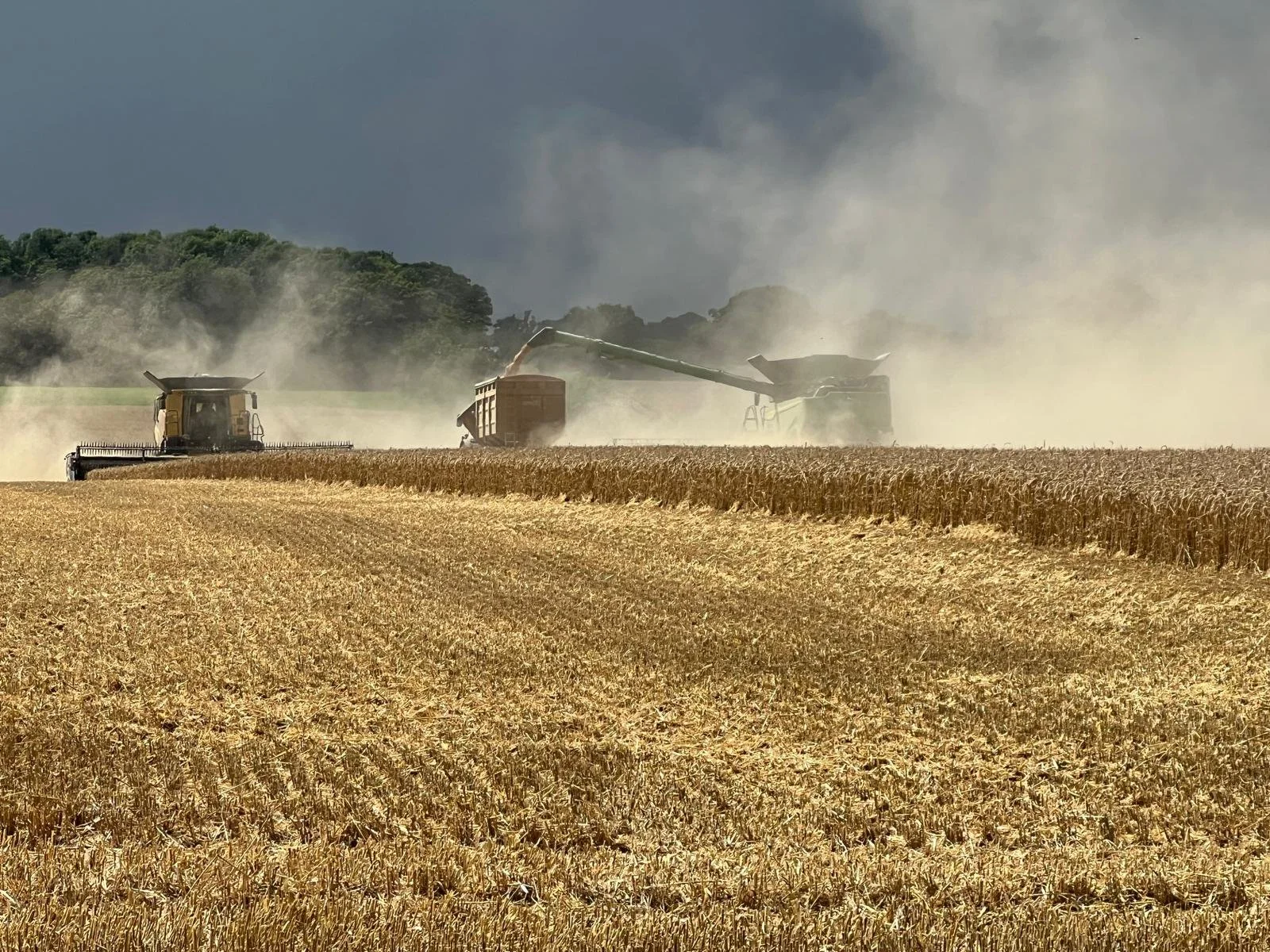
Overall, yields were 10–15% below our five-year average, with spring crops hit particularly hard. Spring barley and spring wheat were down on yield by as much as 35%, the result of an exceptionally dry spring that limited growth just when the plants really needed moisture.
There were other challenges too, including the vining peas suffering from a virus that meant they never podded properly. More positively, the weather through August held up well, meaning less time and fuel spent drying grain, a small silver lining to an otherwise gloomy harvest. As I write, sugar beet lifting has begun. Early indications are encouraging, with yields and sugar content both looking good. Beet is always a crop that can surprise us. It goes to show how resilient the sugar beet plant is given that it suffered a prolonged period of drought in the early stages.
Meanwhile, autumn drilling is well under way. Winter barley and oilseed rape are in the ground, along with a range of cover crops. These mixes, including clovers, vetches, mustard, buckwheat and radishes, help protect and build soil health over the winter months, whilst also supporting insects and wildlife. These fields will be grazed by sheep at the beginning of next year, before being planted with spring barley or oats. Soil remains central to everything we do at Dennington Hall Farms.
We continue to follow a regenerative approach, keeping tillage to a minimum, rotating diverse crops, and encouraging biodiversity across the farm. Worm counts are increasing and birdlife is flourishing along the field margins, and it is rewarding to see the land responding to the changes we have introduced over recent years. We have recently completed a vegetation and invertebrate survey with encouraging results. This sets a baseline to enable us to monitor environmental progress in the coming years as we transition into a more regenerative farming system.
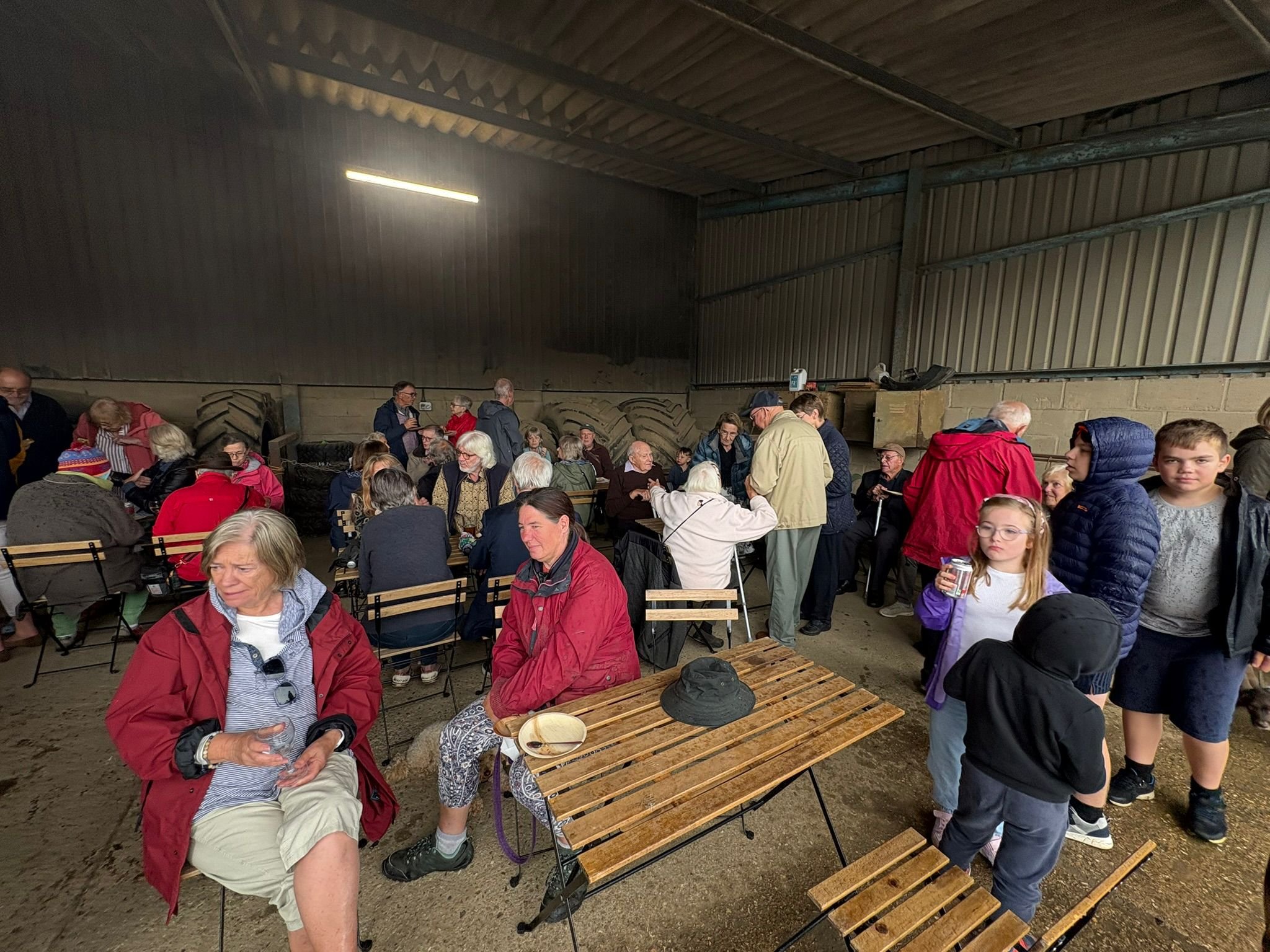
Once the combine had been cleaned and put to bed we held our end-of- harvest BBQ on for local residents of Dennington and Badingham. Guests had the chance to see the farm equipment up close, chat with the staff and neighbours and enjoy a Dennington Hall Farms Red Poll beef burger. On cue as we started the heavens opened with heavy rain, thunder and lightning - perhaps quite fitting for a BBQ that summed up this year’s tricky harvest! But if the weather dampened the ground, it certainly did not dampen spirits. Around 180 people came along and we enjoyed a fantastic evening of food and conversation. We are proud to be part of the Dennington community and always happy to talk about what is happening in the fields and around the farm. If you are walking along the lanes or permissive paths this autumn and wonder what is growing, do stop and ask.
We also continue to welcome school groups keen to learn more about farming and food production. These visits are always a highlight, as the enthusiasm and questions from children remind us how important it is to share the story of farming with the next generation.
Harvest is a team effort, and this year was no different. Our staff worked long hours through July and August, often well into the night, to get the crop safely in. We are grateful for their dedication and also for the patience of local residents during the harvest period when tractors and trailers are so frequently on the roads. As winter approaches, the focus shifts to establishing crops, machinery maintenance, livestock coming in for the winter and strategic grain marketing. Farming is always a long game. Every decision we make now influences the harvest next year.
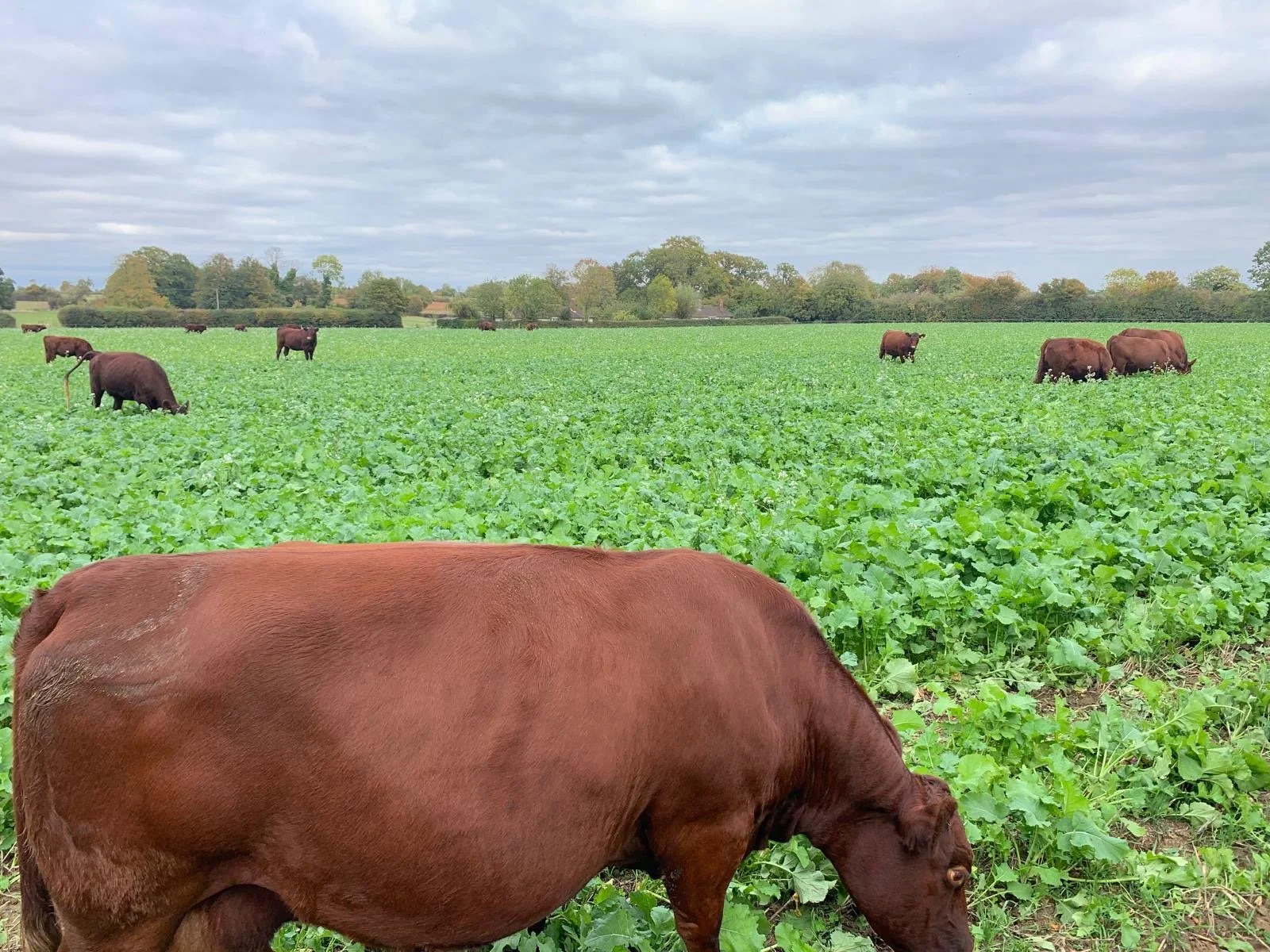
Aside from the arable farming, our three nanny Boer goats kidded at the beginning of September. There is always something special about young livestock being born and grazing the fields with their mothers. If anybody is interested in our fresh sustainable meat boxes, please sign up to the mailing list. We will have our woodland and pasture pork ready very soon, alongside the Red Poll beef and wild venison.
From all of us at Dennington Hall Farms, thank you for your support and interest.
We wish you a restful autumn and winter.
Ryan